
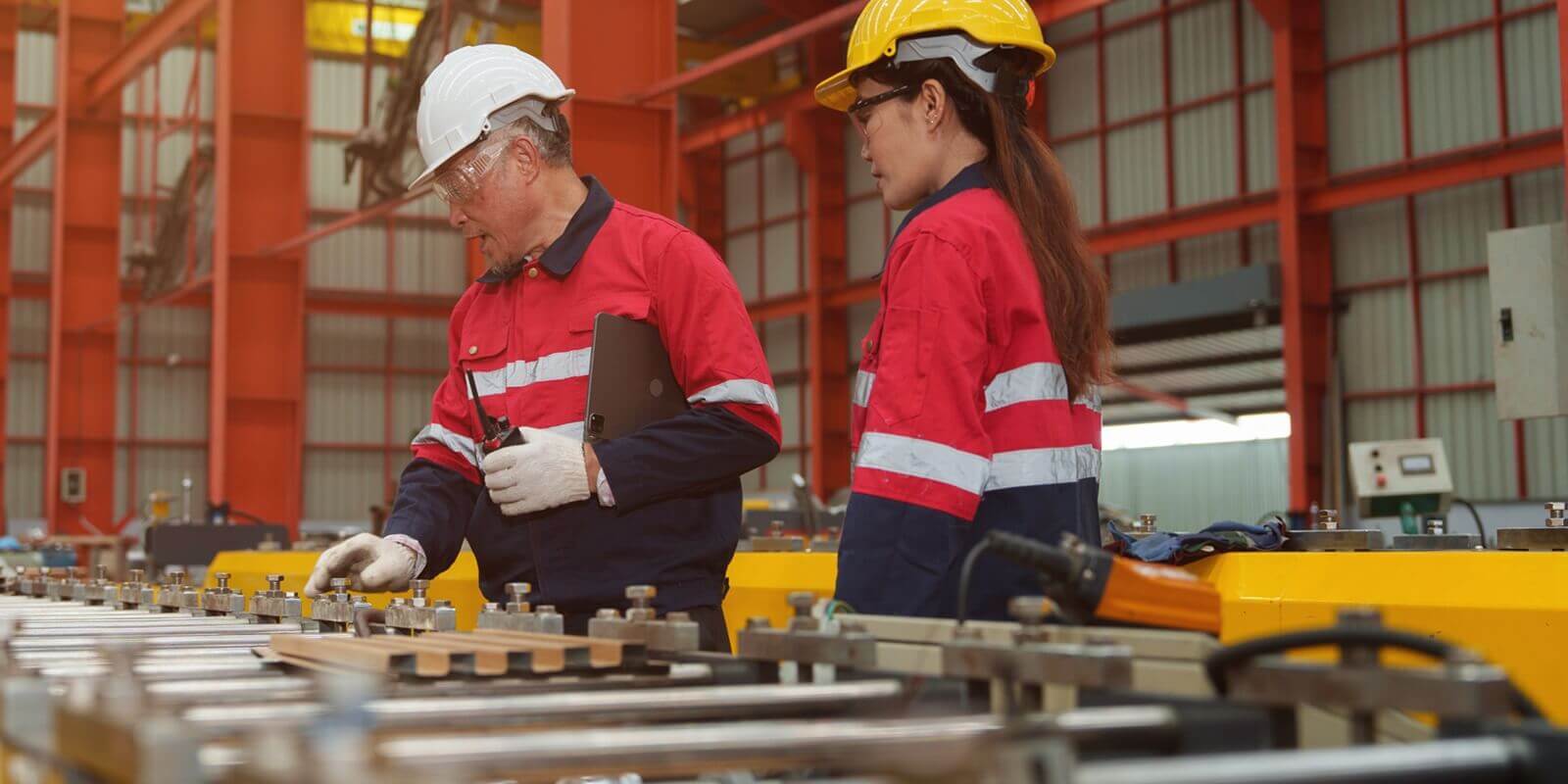

Temporary staffing covers summer manufacturing surges by adding production workers for a set number of weeks, then releasing them when volume drops.
The timing of the request matters as much as the size of it. If your plant needs 120 extra production workers in June, it is recommended to start recruiting in April, because temporary staffing for manufacturers at that size is a project that runs for weeks. Most plants can see the busy season coming, and that lead time is what usually goes unused.
Why Summer Volume Breaks a Staffing Plan That Worked in March
Two things change at once, and only one appears on your production schedule. Your order volume rises. The number of available workers in your area falls, because other plants, warehouses, and food packaging facilities nearby are hiring for the same weeks.
Worker availability also changes for reasons unrelated to your plant. School schedules change which hours parents can work. Heat changes who stays for a full shift in a building without air conditioning. A plant that runs above 90 degrees on the production line in August has a different attendance problem than the same plant in February.
Your overtime math changes too. If your March plan counted on the permanent crew covering extra hours, July is often when that same crew requests time off. A plan assuming both overtime and temporary workers are fully available at once tends to run short on one.
How Long Temporary Staffing for Manufacturers Takes to Fill a Summer Shift
Manufacturing staffing requests move faster when the harder jobs are released first. Request the forklift-certified and machine-specific roles before you request general production, because a production line cannot run at full speed with the general jobs filled and nobody trained on the machines.
The certified jobs are the slower half of the order. In any given market there are fewer forklift-certified workers and experienced machine operators than general production workers. The wider shortage runs in the same direction, with as many as 3.8 million additional manufacturing workers needed between 2024 and 2033 and roughly 5 in 10 skilled openings projected to go unfilled.
Ask the staffing company how long each group of roles has taken to fill in your market, then count backward from your first peak week. That is the number that tells you whether to start the conversation in the spring or sooner.
Which Staffing Model Fits a Summer Surge
Three arrangements cover most seasonal work, and each one solves a different part of the problem.
| Model | What it solves | How long it runs | Best use in a summer plan |
| Temporary staffing | Carries the volume | A set number of weeks tied to your peak | The bulk of a seasonal shift you will not need after peak |
| Temp-to-hire | Gives you a trial period on your own production line | An evaluation period, then a direct hire decision | Roles you intend to keep after the season ends |
| On-site staffing | Puts a coordinator inside your plant | The length of your peak, or ongoing | Orientation, attendance, and the daily count of positions filled |
Most summer plans use more than one. A plant adding 300 workers often runs temporary staffing for the bulk of the shift and temp-to-hire for the roles it wants to keep, deciding on those workers after watching their skills, attendance, and reliability on its own production line.
How to Build a Summer Staffing Plan for Your Plant
Build the plan from your own peak weeks. If your plant runs its own shipping and receiving area, include that in the same plan. Logistics staffing needs may peak at a different time than production, and both draw workers from the same area, so planning them together keeps the two requests from competing.
How to Tell Whether the Summer Staffing Plan Is Working
A summer staffing plan is easier to correct in week three than to review in October. Four numbers tell you where you stand while you can still act on them.
- Fill rate by role rather than in total. A shift that is 96% filled overall can still be missing every forklift operator.
- First-week retention, tracked separately from overall retention. Workers who leave in the first week usually left because of something in the handoff, such as boots, a start time, or a job description that did not match the work. A single retention number blends that with later departures and hides the problem you can still fix.
- Attendance by shift and by day. Weekend and overnight coverage tends to erode first, and a monthly average will not surface it until the month is over.
- Overtime hours compared against the same weeks last summer. If your temporary headcount rose and your overtime did not fall, the workers went to the wrong areas or the plan started too late.
Ask your staffing company to send these numbers on a set schedule each week during the peak, and ask who produces them. A report that depends on someone remembering to run it tends to stop arriving in the busiest week.
What to Have Ready Before You Contact a Staffing Company
A first conversation moves faster when you bring numbers instead of a general request. Have your headcount listed by role, since a request for 20 forklift-certified workers plus 100 general production workers shows which roles need the longest recruiting window. Bring your shift start times and days, including weekend coverage, because a 6 a.m. start and an 11 p.m. start draw from different parts of your local labor market.
Required certifications and machine-specific training belong in that first conversation as well, since they set the length of the recruiting window. So does your first peak week and how long you expect the assignment to run, which change how interviews and orientations get scheduled.
What to Ask a National Staffing Company with Local Offices

If you run plants in three states, you probably want one plan and one set of reports. You also want the recruiting done by people who know each area. Those two things conflict unless the company is built for both.
Ask whether the local offices are company-run or franchised, and ask how local recruiting priorities are set during a busy season. The answer tells you who can change those priorities once your peak begins.
Then ask where each office sits compared to where light industrial workers live. Light industrial work covers manufacturing, warehouse, assembly, packaging, and similar hourly jobs. An office network placed near those neighborhoods is closer to the applicants you need.
Plan Your Summer Production Staffing Now
Luxor Staffing places light industrial workers for manufacturers and specializes in staffing shifts of 300 or more employees. Luxor has 28 company-run offices in eight states, none of them franchises, each placed where light industrial workers live. Interviews and paperwork happen in one appointment, so applicants are not paying for repeat trips.
Temporary staffing for manufacturers works when the plan matches your shift sizes, required certifications, seasonal production surge, and the areas your plants are in. Send your request through the Luxor contact form and choose the employer option so it reaches the office that covers your area.