

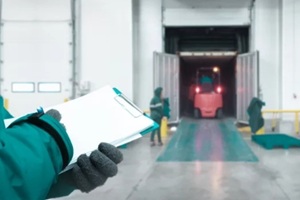
Staffing a refrigerated warehouse means screening for cold tolerance, building a short acclimatization schedule, and setting clear expectations before the offer. Cold storage roles are harder to fill and harder to keep than ambient warehouse work, and the reason is the environment rather than the tasks. Filling freezer and cooler positions at a food production and packaging site takes that specific screen, and a general warehouse screen will not produce it.
Five differences separate cold storage roles from dry warehouse work.
- A cooler and a freezer are two working environments under one job title, with coolers commonly near 35 degrees Fahrenheit and freezer rooms at or below zero.
- Layered PPE slows every task, so productivity targets built for a dry warehouse do not transfer to freezer work.
- Few applicants have worked in sustained cold, so they cannot judge their own tolerance from a job posting.
- Most separations happen within the first several shifts, before the body has adjusted to the temperature.
- Warming breaks change the coverage math, because every break pulls a picker out of a zone that still has volume to move.
Each of those has a fix that costs less than another recruiting cycle.
Why Cold Storage Work Is a Different Hiring Problem
Coolers commonly run near 35 degrees Fahrenheit, which is cold enough that a worker feels it within the first hour. Freezer rooms often sit at or below zero, the standard holding temperature for frozen products. Both rooms sit inside one building and often under one job title, so a single order for cold storage warehouse jobs can mean two very different shifts depending on where the worker is assigned.
Layered personal protective equipment (PPE) slows the work. Freezer coats, bibs, and insulated gloves change how workers move and handle products, so case picking, scanning, labeling, and pallet wrapping require a different pace than they do in an ambient aisle. Productivity targets built for a dry warehouse do not transfer to freezer work. Holding a new employee to those same numbers can make an ordinary adjustment period read as personal failure, which is one reason resignations cluster in the first week.
Applicants cannot judge their own tolerance from a job posting, since the phrase “cold environment” gives no way to compare a sustained 10-hour freezer shift to a cold morning outdoors. Most warehouse work in the local labor market happens at room temperature, so few applicants have cold experience to draw on. That gap between the posting and the work is where many early separations in refrigerated warehouse staffing begin.
The First Week Decides Retention
OSHA’s cold stress guidance recommends gradually increasing a new worker’s workload and allowing more frequent breaks in warm areas while tolerance builds. Many workers leave within the first several shifts, before the body has adjusted to sustained low temperatures.
A short acclimatization schedule is not complicated to build. Put a new worker in the freezer for part of the first day and fill the rest of the shift with cooler, staging, or dock work. Then add freezer time across the next several shifts until the worker carries a full rotation.
OSHA also recommends working in pairs and monitoring physical conditions in cold environments. Pairing gives new workers access to practical details orientation does not cover, such as which gloves work best for case picking and when to take a warming break.
Set Expectations Before the Offer, Not After
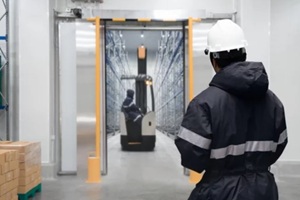
Put numbers in the job preview. A posting that reads “minus 10 degrees Fahrenheit, 10-hour shift, order picking across a 200,000-square-foot building” gives a candidate something concrete to accept or decline. A candidate who accepts without that information and leaves on the second day costs a full recruiting cycle and leaves the position open anyway.
State the PPE split in writing before the offer. If the facility issues freezer coats, bibs, and insulated gloves but expects the worker to bring insulated boots and base layers, say so early. Those items cost money a new worker may not have before the first paycheck.
Let candidates walk the freezer floor during hiring. Ten minutes inside the freezer gives a person real information about the work before they commit, and scheduling that visit alongside the rest of the hiring process keeps the candidate from making a second trip at their own cost.
Break Structure and Shift Design
Cold work requires more frequent warming breaks, and OSHA recommends taking them in warm, dry areas with engineering controls such as radiant heaters. If four pickers in one zone each take an hourly warming break, that zone needs either an extra worker or a staggered break schedule.
Schedule the heaviest picking volume earlier in the shift, when workers are strongest and least cold-stressed. Moving high-volume outbound work into the first hours costs nothing to test against your current sequence. The last two hours of a freezer shift are the wrong place for the day’s heaviest pallet building.
Watch overtime carefully in temperature-controlled warehouse staffing. OSHA names exhaustion as one of the conditions that contribute to cold stress. Track next-day attendance against overtime hours by zone for a few weeks. Many operations find that the overtime they approved one day is what created the following day’s absences.
What to Ask a Staffing Partner
The difference between a cold storage staffing agency and a general warehouse vendor appears in four questions. Ask them during the intake call, before any order is written.
- Does the agency screen specifically for cold environment experience, or does it fill freezer orders from the same pool it uses for dry warehouse work? A general pool is not disqualifying by itself, but it means your acclimatization schedule and your freezer walk carry the entire screen.
- How many workers did the agency place into freezer or cooler roles last quarter, and how many were still on assignment after two weeks? Recent placement volume in cold rooms tells you more than a general warehouse fill rate does.
- What does a recruiter tell an applicant about temperature before the appointment is scheduled? If a recruiter cannot answer that, the candidate is likely to learn the temperature on the first day.
- Can the agency start a large group in stages? Staggering arrivals is what makes an acclimatization schedule possible on a high-volume order.
Build a Cold Storage Staffing Plan

Luxor Staffing recruits from company-run offices near light industrial workforces and specializes in staffing shifts of 300 or more employees. Tell us what the temperature really is at the back of the freezer. How far a picker walks in a shift. Which positions you have refilled three times this year. Tell us those, along with your shift lengths and how many workers you are trying to keep covered, and we will put together a food production staffing plan built around your freezer and cooler shifts.
We recruit from company-run offices near where light industrial workers live, and we are comfortable with large cold storage crews. We are also going to tell you honestly what a realistic first week looks like. Complete the form and we will start there.